> For the complete documentation index, see [llms.txt](https://docs.butlr.io/llms.txt). Markdown versions of documentation pages are available by appending `.md` to page URLs; this page is available as [Markdown](https://docs.butlr.io/getting-started/authentication.md).
# Authentication
### [OAuth 2.0 Password Grant](https://oauth.net/2/grant-types/password/)
Request
{% tabs %}
{% tab title="cURL" %}
```bash
curl --location --request POST 'https://api.butlr.io/api/v2/login' \
--header 'Content-Type: application/json' \
--data-raw '{
"username": "your@email.com",
"password": "your_password"
}'
```
{% endtab %}
{% tab title="Go" %}
```go
package main
import (
"fmt"
"strings"
"net/http"
"io/ioutil"
)
func main() {
url := "https://api.butlr.io/api/v2/login"
method := "POST"
payload := strings.NewReader(`{
"username": "your@email.com",
"password": "your_password"
}`)
client := &http.Client {
}
req, err := http.NewRequest(method, url, payload)
if err != nil {
fmt.Println(err)
return
}
req.Header.Add("Content-Type", "application/json")
res, err := client.Do(req)
if err != nil {
fmt.Println(err)
return
}
defer res.Body.Close()
body, err := ioutil.ReadAll(res.Body)
if err != nil {
fmt.Println(err)
return
}
fmt.Println(string(body))
}
```
{% endtab %}
{% tab title="Python" %}
```python
import requests
import json
url = "https://api.butlr.io/api/v2/login"
payload = json.dumps({
"username": "your@email.com",
"password": "your_password"
})
headers = {
'Content-Type': 'application/json'
}
response = requests.request("POST", url, headers=headers, data=payload)
print(response.text)
```
{% endtab %}
{% endtabs %}
Response
```json
{
"access_token": "your_access_token",
"refresh_token": "your_refresh_token",
"id_token": "your_id_token",
"scope": "your_scopes",
"expires_in": 1000,
"token_type": "Bearer"
}
```
### [OAuth 2.0 Client Credentials Grant](https://oauth.net/2/grant-types/client-credentials/)
#### How to create your client credentials
1. Go to the [Butlr Web App](https://app.butlr.io).
2. Sign in using your username and password.
3. Click the expandable menu (v) in the top navigation bar (upper right corner) and select **Account Settings**.
 4. Navigate to the **API tokens** tab.
5. Click the **Create token** button.
6. Enter a **Name** and a **Description**, then click **Create**.
7. A dialog box will display your **Client ID** and **Client Secret**.
4. Navigate to the **API tokens** tab.
5. Click the **Create token** button.
6. Enter a **Name** and a **Description**, then click **Create**.
7. A dialog box will display your **Client ID** and **Client Secret**.
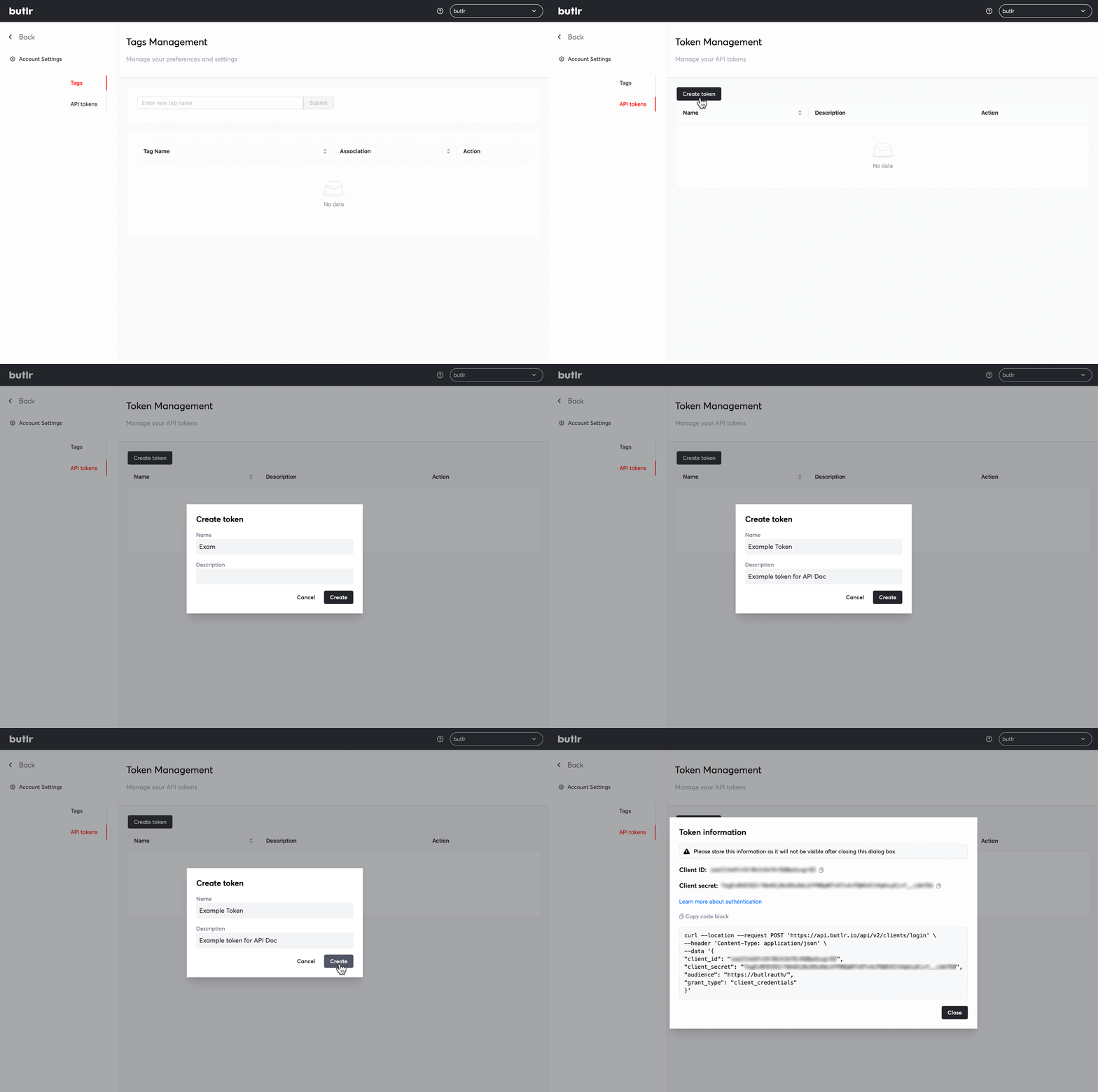 * ⚠️ Important: Be sure to copy and securely store these credentials. For security reasons, they will not be shown again after you close the dialog.
Request
{% tabs %}
{% tab title="cURL" %}
```bash
curl --location --request POST 'https://api.butlr.io/api/v2/clients/login' \
--header 'Content-Type: application/json' \
--data '{
"client_id": "your_client_id",
"client_secret": "your_client_secret",
"audience": "https://butlrauth/",
"grant_type": "client_credentials"
}'
```
{% endtab %}
{% tab title="Go" %}
```go
package main
import (
"fmt"
"strings"
"net/http"
"io/ioutil"
)
func main() {
url := "https://api.butlr.io/api/v2/clients/login"
method := "POST"
payload := strings.NewReader(`{
"client_id": "your_client_id",
"client_secret": "your_client_secret",
"audience": "https://butlrauth/",
"grant_type": "client_credentials"
}`)
client := &http.Client {
}
req, err := http.NewRequest(method, url, payload)
if err != nil {
fmt.Println(err)
return
}
req.Header.Add("Content-Type", "application/json")
res, err := client.Do(req)
if err != nil {
fmt.Println(err)
return
}
defer res.Body.Close()
body, err := ioutil.ReadAll(res.Body)
if err != nil {
fmt.Println(err)
return
}
fmt.Println(string(body))
}
```
{% endtab %}
{% tab title="Python" %}
```python
import requests
import json
url = "https://api.butlr.io/api/v2/clients/login"
payload = json.dumps({
"client_id": "your_client_id",
"client_secret": "your_client_secret",
"audience": "https://butlrauth/",
"grant_type": "client_credentials"
})
headers = {
'Content-Type': 'application/json'
}
response = requests.request("POST", url, headers=headers, data=payload)
print(response.text)
```
{% endtab %}
{% endtabs %}
**Response**
```json
{
"access_token": "your_access_token",
"scope": "your_scopes",
"expires_in": 1000,
"token_type": "Bearer"
}
```
* ⚠️ Important: Be sure to copy and securely store these credentials. For security reasons, they will not be shown again after you close the dialog.
Request
{% tabs %}
{% tab title="cURL" %}
```bash
curl --location --request POST 'https://api.butlr.io/api/v2/clients/login' \
--header 'Content-Type: application/json' \
--data '{
"client_id": "your_client_id",
"client_secret": "your_client_secret",
"audience": "https://butlrauth/",
"grant_type": "client_credentials"
}'
```
{% endtab %}
{% tab title="Go" %}
```go
package main
import (
"fmt"
"strings"
"net/http"
"io/ioutil"
)
func main() {
url := "https://api.butlr.io/api/v2/clients/login"
method := "POST"
payload := strings.NewReader(`{
"client_id": "your_client_id",
"client_secret": "your_client_secret",
"audience": "https://butlrauth/",
"grant_type": "client_credentials"
}`)
client := &http.Client {
}
req, err := http.NewRequest(method, url, payload)
if err != nil {
fmt.Println(err)
return
}
req.Header.Add("Content-Type", "application/json")
res, err := client.Do(req)
if err != nil {
fmt.Println(err)
return
}
defer res.Body.Close()
body, err := ioutil.ReadAll(res.Body)
if err != nil {
fmt.Println(err)
return
}
fmt.Println(string(body))
}
```
{% endtab %}
{% tab title="Python" %}
```python
import requests
import json
url = "https://api.butlr.io/api/v2/clients/login"
payload = json.dumps({
"client_id": "your_client_id",
"client_secret": "your_client_secret",
"audience": "https://butlrauth/",
"grant_type": "client_credentials"
})
headers = {
'Content-Type': 'application/json'
}
response = requests.request("POST", url, headers=headers, data=payload)
print(response.text)
```
{% endtab %}
{% endtabs %}
**Response**
```json
{
"access_token": "your_access_token",
"scope": "your_scopes",
"expires_in": 1000,
"token_type": "Bearer"
}
```